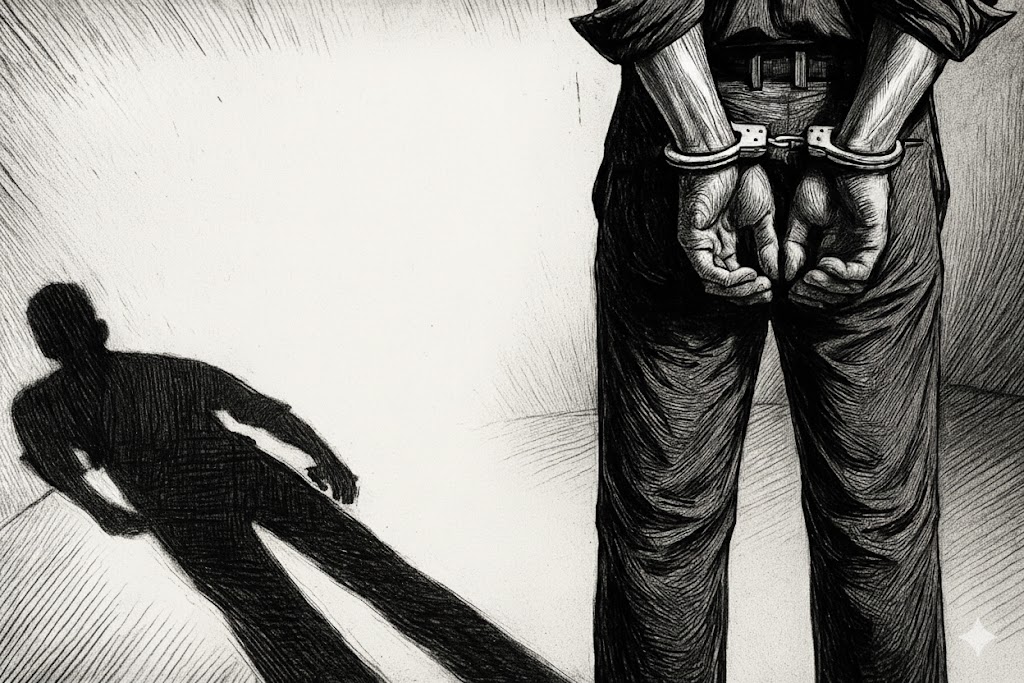



What Evidence Is Needed to Prove Domestic Battery in Florida?
You have been arrested for domestic battery, but there are no photographs of an injury and no one else saw what happened. Does the State have a case? What if the police report leaves out your account, or the person who accused you now wants the charge dropped?
To convict someone of domestic battery in Florida, the State must prove the battery charge beyond a reasonable doubt with evidence the court allows it to use. Visible injuries, a video of the incident, and an independent eyewitness are not required in every case. The strength of the case depends on what the evidence proves and how it holds up when challenged.
The first step is to identify what the prosecution has, what is missing, and whether the available evidence supports the alleged offense. A police report alone rarely answers those questions.
What Must the State Prove in a Domestic Battery Case?
Under Florida Statute § 784.03, battery includes intentionally touching or striking another person against that person’s will, or intentionally causing bodily harm. The State must prove the applicable form of battery and that the defendant committed it.
The domestic violence classification also depends on the relationship. Section 741.28 covers qualifying family or household members, including spouses, former spouses, and parents of a child in common. Except for parents who share a child, the people must currently live or previously have lived together in the same dwelling. Dating someone does not, by itself, meet that definition.
An accident is different from intentional contact. Lawful self-defense can also defeat a charge. Your lawyer should identify the State’s theory before assessing whether the evidence supports it.
Is the Evidence Needed for an Arrest Different From the Evidence Needed for a Conviction?
Yes. Police need probable cause to make an arrest. That is a lower standard than proof beyond a reasonable doubt at trial. An officer may have enough information to arrest someone even though the case later proves too weak to prosecute or win.
An arrest therefore does not establish guilt. The prosecutor must assess whether admissible evidence can prove the charge, and the defense can challenge both the evidence and the conclusions drawn from it.
If you are reviewing an arrest report, distinguish what the officer personally saw from what someone told the officer. Those are different sources of information, and the rules for using them at trial may differ.
Can You Be Convicted Without Visible Injuries?
Yes. Intentional, unwanted touching or striking can be battery even if it leaves no bruise, cut, or other visible mark. A case involving an alleged push does not automatically fail because no one needed medical care.
Still, the presence or absence of injuries may matter when testing a specific account. If someone describes repeated blows that supposedly caused visible injuries, photographs and medical records may help confirm or challenge that description. The timing of the photographs, what they show, and what they leave out should all be considered.
Injuries also do not settle who started an encounter or whether someone acted in self-defense. They are part of the evidence to assess.
What If There Were No Other Witnesses?
The alleged victim is a potential witness. A case can proceed even if no neighbor, friend, or other person saw the incident. Testimony from one witness can support a conviction if it proves the charge beyond a reasonable doubt and the factfinder believes it.
When the accounts conflict, the defense should examine how each account fits the available records. Did the person give different versions of a key event? Could they see what they described? Does a message or recording contradict the timeline?
A small difference in wording does not necessarily show dishonesty. The useful question is whether a discrepancy concerns something that matters to the charge. A careful defense focuses on those points instead of assuming that conflicting accounts require dismissal.
What Evidence Do Prosecutors Use?
911 Calls and Body-Camera Footage
A 911 recording may capture the caller’s first account, sounds in the background, or events still taking place. Body-camera footage may show injuries, the condition of the scene, statements by the people involved, and how officers handled conflicting accounts.
We compare the recordings with the written report. A summary may omit a question that shaped an answer or leave out a statement that supports the defense. The full recording may also show that an officer arrived after the alleged contact and did not see it happen.
Text Messages, Emails, and Social Media
Messages can help establish a timeline or show what someone said before and after an incident. A cropped screenshot may give a different impression from the full exchange. An apology also needs context: what was the person apologizing for?
The party offering a message must establish that it is what they claim it is. Under Florida’s authentication rule, that requires supporting evidence. A contact name displayed on a phone does not settle every question about who wrote a message, whether the exchange is complete, or whether it has been altered.
Photographs, Medical Records, and Witness Accounts
Photographs and medical records may document an injury, but they do not necessarily establish who caused it or how it happened. A witness may have seen the contact, heard an argument from another room, or arrived afterward. Those differences affect what the witness can help prove.
The defense should review the defendant’s injuries and records as well. Evidence gathered at the scene may focus heavily on the person who first reported the incident.
Can Every Statement in a Recording or Police Report Be Used at Trial?
No. Recording a statement does not automatically make it admissible. When an out-of-court statement is offered to prove what it says, hearsay rules may apply.
Florida law recognizes exceptions, including certain spontaneous statements and excited utterances under section 90.803. The circumstances must meet the exception. A statement does not qualify simply because the person was upset or spoke to a police officer.
The constitutional right to confront witnesses raises a separate issue. In Davis v. Washington, the Supreme Court distinguished statements made to obtain help during an ongoing emergency from statements aimed at establishing past events for prosecution. That distinction can affect whether the State may use a statement when the speaker does not testify. Different parts of the same call or interview may require separate analysis.
Your lawyer should assess the particular statement, why it is being offered, and the rules that apply. Neither a police report nor a recording makes every accusation in it available to the jury.
What If the Alleged Victim Will Not Cooperate?
The prosecutor decides whether to pursue the charge. A request to drop the case does not require dismissal, and an unwilling witness does not automatically leave the State without usable evidence.
The question is what admissible evidence remains and whether it proves the offense. Our article about cases in which the victim does not want to press charges explains that issue in more detail.
How Can Evidence Support the Defense?
A Miami domestic violence lawyer should compare the State’s account with the full record before advising you about a plea or trial. Useful questions include:
- Does the evidence show intentional contact, or could the contact have been accidental?
- Do the recordings and witness accounts support the claimed sequence of events?
- Are there messages, photographs, or witnesses the police did not examine?
- Does the evidence support lawful defensive force?
- Can the State properly introduce the evidence it needs to prove the charge?
When the accusation is disputed, evidence of a motive to lie must be tied to the facts. A breakup or custody dispute alone does not prove that someone fabricated an allegation. Our guide to defending against false allegations of domestic violence discusses how those claims can be investigated.
If you used force to stop an attack, the circumstances of that force matter. Evidence of threats, your injuries, and what happened immediately before the contact may support self-defense in a domestic violence case. Force used after the danger ended may be treated differently.
The defense may use these findings to ask the prosecutor not to file charges, seek dismissal where supported, challenge evidence in court, or prepare for trial. The appropriate step depends on the case.
What Should You Preserve After an Arrest?
Evidence can become harder to obtain as time passes. Messages may be lost, injuries may heal, and surveillance systems may overwrite footage. Tell your lawyer promptly about records or witnesses that could matter.
- Keep full message exchanges. Preserve the original messages and available backups, including dates and times. Do not delete unfavorable messages or edit the conversation.
- Save existing photographs and recordings. Keep the original files. Avoid cropping, adding labels, or changing the only copy.
- Identify witnesses and cameras. Give your lawyer names, contact details, and locations where footage may exist so preservation requests can be considered.
- Document injuries and seek needed care. Keep photographs and medical records related to the incident, including records of your own injuries.
- Follow the court’s orders. Do not contact a protected person to obtain a statement or ask someone else to pass along a message that would violate a no-contact order. Let counsel address lawful ways to gather evidence.
You do not need to decide which facts help or hurt before speaking with your lawyer. Give counsel the complete account and the records you have. Missing context can lead to poor advice about the strength of the case.
Have the Evidence Reviewed Before Deciding How to Resolve Your Case
A domestic battery case should be assessed on the evidence that can actually be proved in court. The absence of an injury does not guarantee dismissal, and a detailed police report does not guarantee a conviction.
Our office can review the charge, compare the available accounts, and identify evidence that needs to be preserved or challenged. Have your arrest paperwork, case number, and any court orders available when you contact us. We can discuss the issues that need attention and the options supported by the facts of your case.
CALL US NOW for a CONFIDENTIAL INITIAL CONSULTATION at (305) 538-4545, or take a moment to fill out our confidential and secure intake form.* The additional details you provide will greatly assist us in responding to your inquiry.
*Due to the large number of people who contact our law office requesting our assistance, it is strongly suggested that you take the time to provide us with specific details regarding your case by filling out our confidential and secure intake form. The additional details you provide will greatly assist us in responding to your inquiry promptly and appropriately.
THERE ARE THOUSANDS OF LAW FIRMS AND ATTORNEYS IN SOUTH FLORIDA. ALWAYS INVESTIGATE A LAWYER’S QUALIFICATIONS AND EXPERIENCE BEFORE MAKING A DECISION ON HIRING A CRIMINAL DEFENSE ATTORNEY FOR YOUR MIAMI-DADE COUNTY CASE