


David Edelstein is an AV Peer Review Rated criminal defense attorney
representing clients in state and federal criminal matters across the State of Florida.

If you or someone you love is facing criminal charges, you need someone on your side. 100% Criminal Defense 24/7

And The Tide Turns…

March 21st, 2012
Share

As the smoke clears, evidence is starting to mount that conflicts with George Zimmerman’s claim that Trayvon Martin was the aggressor in this tragic incident.  It’s pathetic and deplorable that Trayvon’s family had to hire an attorney to follow up on obvious leads that were overlooked by the Sanford Police Department.  With each passing day, the momentum–and evidence–is building toward a criminal prosecution of Zimmerman…

Be Careful for What You Wish For…

March 20th, 2012
Share

The biggest challenge to bringing criminal charges against the “neighborhood watch captain” for the shooting of Trayvon Martin may be the lack of evidence disputing Zimmerman’s account of the incident. In order to file a manslaughter charge, prosecutors must believe that they have enough evidence to prove to a jury–beyond a reasonable doubt–that Zimmerman’s actions were unlawful. But even if they file the charge, they will face a significant hurdle under Florida’s ‘Stand Your Ground’ law which eliminated a citizen’s duty to retreat before using deadly force…  Read the story here: http://dedelste.in/GAq9vj

Sticks and Stones May Break My Bones but Words…

January 26th, 2012
Share

There’s something special about being a cop.

Not only do you get to carry a badge and gun  and put people in jail.  You also get the special power to keep them there.  How, you ask?  Simple.  Just  open your mouth and say whatever you feel like saying.

In other words: you get the power to lie with impunity.

Most of the time, police fabrication and perjury slips under the radar.  From time to time though, it’s exposed and the public recoils in horror as prosecutors and police departments scramble to paint the perpetrators as rogue cops.

But the fact remains: even when they’re caught, these “rogue” cops often escape with little more than a slap on the wrist–if that.

Take the sordid case of Detective Ed Hill of the North Miami Beach Police Department. Mr. Hill escaped forgery charges Tuesday by agreeing to resign and give up his law enforcement accreditation.  As if the forgery allegation–that he faked a homicide suspect’s signature on a Miranda rights waiver form–isn’t bad enough, Mr. Hill–the lead investigator in the murder case against David Superville–was previously accused of having a romantic affair with the suspect’s wife.  Yes, you read that correctly.  Mr. Hill started dating the suspect’s wife after he safely booked him into the Dade County Jail.

Ed Hill and suspect's wife

Det. Ed Hill with suspect's wife

But ultimately, it was the  forgery allegation that led to  Mr. Hill’s “early retirement.”

So why didn’t the State Attorney’s Office file forgery charges against Hill?  The State Attorney’s final memo conceded that the form was a fake, but claimed that prosecutors wouldn’t be able to prove who did it: “ln order to prove a criminal charge of forgery, the state would have to prove beyond a reasonable doubt that the subject was the person who did the tracing.”  But, doesn’t the State always have to prove beyond a reasonable doubt that the defendant committed the crime?  This seems to suggest that in order to file charges against Mr. Hill they needed to have a video of him, in flagrante delicto, pulling out his …. pen.

But the fact is, the State Attorney’s Office files and prosecutes hundreds if not thousands of cases a year without this type of evidence.   Without the video.  Without the body.  Without the “smoking gun.”

They’re called circumstantial cases–and this one’s a no-brainer.

Ask yourself, who had the means, motive, and opportunity to commit this forgery?

The State Attorney’s close-out memo points out that “there were multiple people who had access to the file and the documents” making it sound like anyone could be to blame for the forgery.  But it couldn’t have been just anyone.  It had to be someone who had access to the file.  And the only people who had access to the file work for the North Miami Beach Police Department.  And:

-Mr. Hill was the lead detective in the case.

-Mr. Hill had unfettered access to the file

-Mr. Hill was already in hot water for committing adultery with the suspect’s wife.

-It was Mr. Hill  who produced the document for the first time just as the case was going to trial  — four years after the suspect’s arrest.

Means, motive, and opportunity.  It doesn’t get any clearer than this.

So why then didn’t the State Attorney file charges against Mr. Hill?   Because this wasn’t Hill’s only case. And his credibility as a witness in other cases will continue to be an issue as it is in the  murder case against Lazaro Cortes–the alleged lookout in the May 2006 slaying of a North Miami Beach dollar store clerk.

In that case, defense lawyer Sydney Smith is arguing that his client’s statements should be suppressed because Hill coerced his client into giving a false confession.  He filed a motion on Tuesday citing the Superville case.

When asked about the State Attorney’s decision not to file charges against Hill, Smith observed: “If they prosecute [Hill], he’s of no value to them as a witness.”

And “therein lies the rub.”

5 Things You Should Never Do When Talking with a Cop

December 30th, 2011
Share

The following 5 tips assume that you aren’t a hothead who lacks impulse control, and you would rather avoid spending the night in jail:

1. Never raise your voice or challenge the officer even if he is confrontational and raises his. It’s not a bad idea to address the officer as “sir,” “officer” or “officer (last name). Ask yourself if you’d rather be right or arrested?

2. Never ignore the officer’s directions. Nobody likes being ignored.

3. Never demand anything from the police officer. It’s great that you pay taxes, everybody does.

4. Never ask the officer for his badge number; instead memorize it.

5. Never tell the officer that you are going to report him. You might as well say: “take me straight to jail.”

Nobody plans on getting arrested! That’s why you should know beforehand who to call–just in case.

Take a moment to download my vCard. That way, at least you’ll know who to call if you, a friend, or a family member get in trouble and need immediate help.

Copyright © 2011-2012 David M. Edelstein, PA

Fallout Continues Over Urban Week Miami Beach Police Shooting

December 25th, 2011
Share

Seven Months after being shot ostensibly by a barrage of bullets by police, three innocent bystanders try to piece their lives together while they continue waiting for answers

Last Memorial Day Weekend, Miami Beach police officers (together with some of Hialeah’s finest) fired over 100 bullets at a suspect’s vehicle–despite the fact that there were dozens of innocent bystanders in the immediate vicinity. Three of those bystanders were shot and seriously injured. Incredibly enough, three days later the Miami Beach Police Department announced that they found a gun in the suspect’s car.

In the aftermath of the shooting, officers on the scene harassed and wrongfully arrested other innocent bystanders who had the gall to film the incident on their phones.  Luckily, the police weren’t able to confiscate and destroy all of the recordings.

One of the victims, Crystal Rivera, had to change her numbers and get an attorney after feeling that Miami Beach Police investigators were treating her like a criminal by seizing her clothing, preventing family members from visiting her in the hospital, and performing a gun powder residue test on her hands.  She recalls one investigator asking her: “How do you know you were shot by a Miami [Beach] cop?’’

The most troubling part of this story, is that it is anything but an isolated instance of police brutality and misconduct for the Miami Beach Police Department. In the past year we have seen abhorrent conduct by Miami Beach officers in numerous other high-profile cases.

It doesn’t take a rocket scientist to figure out there is something seriously wrong at the Miami Beach Police Department. Which begs the question:  Where is the U.S. Justice Department?

Read more here: http://www.miamiherald.com/2011/12/17/2560574_p3/wounded-urban-beach-bystanders.html#storylink=cpy

Karzai Shows Grace in Extending Pardon–Not!

December 2nd, 2011
Share

When I first saw the headline about Karzai pardoning a rape victim serving a 12 year prison term for “committing” adultery, I said to myself: “Now there’s an act of courage by an enlightened leader determined to lead his country boldly into the 19th century.”  

But then my high hopes for a progressive  Afghanistan were dashed after learning the pardon was conditioned upon the victim agreeing to marry her attacker…

Would someone please remind me again what are exit strategy is in Afghanistan?

The Devil Made Me Do It: Shoplifting (Petit Theft)

November 14th, 2011
Share
Caught Shoplifting

The Devil Made Me Do It

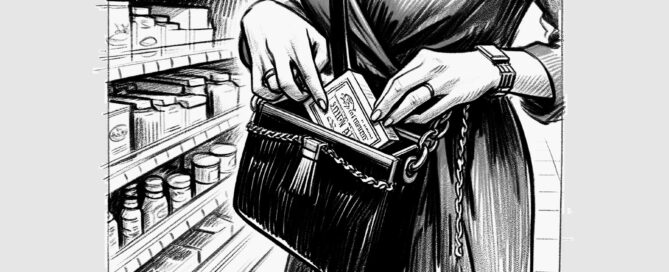
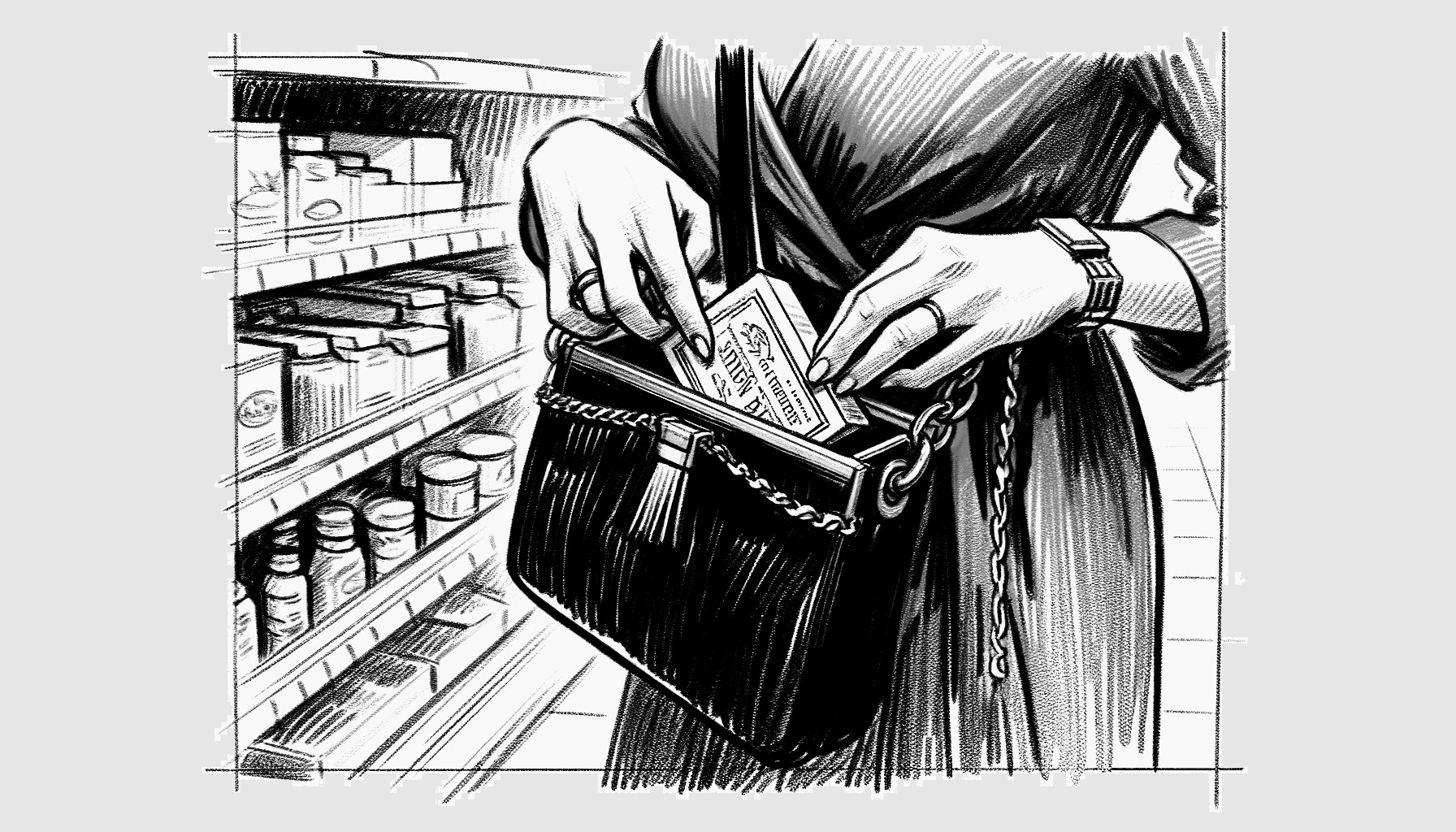
At any given time, I represent at least 5 – 10 clients who are charged with shoplifting or petit theft. Invariably, my client is a professional or student with a squeaky clean record.  This begs the question:  Why did they do it?

Although there certainly are cases where people are falsely accused, most of my shoplifting clients freely admit their guilt and come to me racked with shame–they actually apologize for coming to see me (?).  I try to get them to stop beating themselves up, but it’s hard. They are engaged in an epic struggle to reconcile their criminal behavior with their self-image as law-abiding citizens. The worst part is that no matter how valiantly they try, they never seem to come up with an answer.

This is where I come in.

As you can imagine, I have a pretty unique perspective as a criminal defense attorney. After a while, I start to see patterns .  One of those patterns is the self-flagellating shoplifting client.

And here is what I have learned: No matter how hard you try, you will probably never be able to explain what possessed you to shoplift.

Unless you are a kleptomaniac, you will have to chalk this one up to being a highly complex creature commonly referred to as…a human being.

What, you thought you were perfect?

Using the First Amendment and the Media to Publicize and Strike Against Rampant Police Corruption

November 10th, 2011
Share

Using the First Amendment and the Media to Publicize and Strike Against Rampant Police Corruption

Walking by the Boston Common one afternoon in October 2007, Simon Glik saw three police officers forcing a young man face down on a park bench and heard a bystander say, “You’re hurting him.” Concerned that officers were using unreasonable force to arrest the man, Glik, a young lawyer, used his cell phone to film the incident from 10 feet away. After placing the suspect in handcuffs, an officer told him he’d taken enough pictures. Glik responded, “I am recording this. I saw you punch him.”

An officer asked Glik if his cell phone recorded audio. Glik said yes. The officer cuffed Glik, and arrested him on a charge of violating Massachusetts’s wiretap law, aiding in the escape of a prisoner, and disorderly conduct. They also erased some of the recording, according to news accounts. Glik was part of a trend that is riling journalists and activists.

From Georgia to Nevada, police are arresting people who are photographing or videotaping their activities from public space or their own property, seizing their equipment and erasing the images.  No one keeps data on the frequency of such arrests. But a spate of high-profile incidents in several states suggests the numbers are growing.

“Nobody should stand for this,” said Lucy Dalglish, executive director of the Reporters Committee for Freedom of the Press, an Arlington, Va., based nonprofit organization that provides legal help to reporters and news organizations.

Police can arrest people who are interfering with their investigation or are committing a crime themselves, she said. “If you are throwing a rock at police officers with one hand and holding a video camera in the other, you are not protected.” But as more and more videos of confrontations surface on the Internet, it appears that in many cases the officers just don’t want to be taped.

Glik isn’t a professional journalist, but he may have scored the victory for the right to record police in public spaces that Davis and Peters were calling for. With help from the American Civil Liberties Union, he sued the Boston police for violating his First and Fourth amendment freedoms— and won.

In August of this year, the First District U.S. Court of Appeals thoroughly vindicated Glik.

Wrote Circuit Judge Kermit Victor Lipez: “We conclude, based on the facts alleged, that Glik was exercising clearly established First Amendment rights in filming the officers in a public space, and that his clearly-established Fourth Amendment rights were violated by his arrest without probable cause.”

It makes no difference if the person behind the camera is a journalist or everyday citizen, according to Lipez. ”Changes in technology and society have made the lines between private citizen and journalist exceedingly difficult to draw,” (and therefore First Amendment protections for news-gatherers can no longer) “turn on professional credentials or status,” he wrote.

It’s what the framers of Bill of Rights had in mind, Klinger of the University of Missouri-St. Louis observes. Newsgathering was very much the task of “citizen journalists” of 18th-century America. Lipez added that “ensuring the public’s right to gather information about their officials not only aids in the uncovering of abuses … but also may have a (beneficial) effect on the functioning of government.”

It’s particularly important to protect the right to report on the activities of law enforcement officers because they “are granted substantial discretion that may be misused to deprive individuals of their liberties,” he continued. Don’t look for a national test case before the Supreme Court on this issue, said Dalglish.

“It’s never going to get to the Supreme Court because the judges throw this bullshit out,” she said. “You can’t take something to the Supreme Court unless you lose, and almost no one loses” cases in which people are arrested for taking video of police.

But there is a disconnect between what the courts hold and what’s happening on the street.

Conservative GOP lawmakers lead efforts to reform Criminal Justice

November 10th, 2011
Share

Former law-and-order GOP lawmakers are taking the lead in reforming criminal justice systems, giving a preview of potential changes that could occur during the upcoming Presidential election

In 2001, just after Rick Perry assumed the job as Governor of Texas, he vetoed a bill that would have ended the practice of arresting those suspected of class C misdemeanors—fine-only crimes that don’t require jail time, such as traffic offenses. Now, fast-forward to 2007- he signed a law allowing police officers to issue citations instead of making arrests for certain class A and B misdemeanors, including marijuana possession. Perry’s reversal came about in part because the state faced a projected shortfall of 17,000 inmate beds.

The present shift taking place within the Criminal Justice system is the result of two curves sloping in opposite directions—a dramatic fall in crime rates from state-to-state, and exploding state spending on corrections (the second-fastest-growing category of state spending behind Medicaid).

What does this mean for the upcoming battle for the White House?  Should a Republican win the presidency, a return to get-tough approaches seems unlikely. Yet, ill-targeted budget cuts or sensational crimes linked to reforms still could take policy in the other direction.

Consider these possible scenarios under a Republican President:

One priority under a Republican administration will be limiting the number and reach of federal criminal laws. Tackling such “over-criminalization” likely will be a target for a Republican president, says Tim Lynch, who directs a project on criminal justice at the libertarian Cato Institute in Washington. “I think you’d be less likely to see new federal criminal statutes come along with a conservative in the White House,” he says, citing a federal 2009 hate-crimes law and the 2010 Dodd-Frank financial reform legislation as examples.

Another possibility under a GOP president, is the possibility of a return to previous get-tough policies. Though budget-cutting politics have worked in favor of changes like reducing prison populations, they also can do the opposite. In September, for example, the Senate Committee on Appropriations recommended eliminating funding for the Second Chance Act for fiscal year 2012, and the law has yet to be reauthorized after expiring last September. For states considering investing in reentry programs, the loss of federal support could kill their interest. And with a Republican in the White House, budget cuts at the U.S. Department of Justice are more likely, says Lynch. Though noting that he can speak “only in the broadest strokes” at this stage, he thinks a Republican president would bring increased scrutiny of the department’s grants to state and local police departments, prosecutors’ offices, and prisons.

One Republican activist has commented: “Real reform will require Republican dominance,” asserts Eli Lehrer, vice president of the conservative Heartland Institute. “It will not happen under a Democratic administration.”

That point is obviously open for personal interpretation and water cooler debate.   Nonetheless, 18 months is a lifetime in politics, and there are a myriad of events which could radically change the political environment affecting criminal justice as we approach the next Presidential election.

Federal Prosecutor’s Closing Comments Yield Reversal in Drug Trafficking Case

November 10th, 2011
Share
A federal appeals court has overturned the drug trafficking conviction of a California man because of a prosecutor’s “inflammatory” remarks during his closing arguments.

In a ruling (PDF) Tuesday, the San Francisco-based 9th U.S. Circuit Court of Appeals said the prosecutor’s remarks were both “improper and prejudicial,” the Recorder reports.

The court ordered a new trial for Arturo Sanchez, a U.S. citizen living in Mexico who was arrested at the Mexican border in 2008 after border patrol agents found 64 pounds of cocaine hidden in various compartments of his car.

At trial, Sanchez explained that his family had been threatened by the cartel and they had thretened to do something unless he complied with their demands.

Assistant U.S. Attorney Carlos Arguello, in his closing argument, ridiculed the defendant’s story, suggesting that an acquittal would send a message to all drug traffickers that they can “get away” with their crimes if they instruct the people they recruit as drivers to say they had been forced to do so because their families had been threatened.

Appeals court judge Harry Pregerson, who wrote the opinion for the three judge panel, called the remarks a “policy argument against acquittal” that improperly appealed to the “passions, fears and vulnerabilities” of the jury.

Sanchez’s lawyer, David Zugman of San Diego, said he doubted the ruling would stop prosecutors from making such generalized appeals to the safety of the community, which have proven to be pretty effective with juries.

Keep posted for an update.

TEXT MESSAGE


FN3SP2