



Cooperation Agreements and 5K1.1 Motions: What You Should Know Before You Talk to the Feds
When you or someone close to you is facing a federal investigation, you’ll likely hear terms such as cooperation agreement, substantial assistance, and 5K1.1 motion. These concepts shape how federal cases are negotiated and how sentences are ultimately decided, yet many people misunderstand how they work.
We handle federal cases throughout Miami and South Florida, and we’ve seen cooperation change the outcome for some clients while causing new problems for others. Our goal here is to offer a clear, practical explanation of what these agreements actually mean, how federal prosecutors use them, and what you should consider before making any decision about cooperating.
What a Cooperation Agreement Actually Is
A cooperation agreement is a written deal between you and federal prosecutors, typically incorporated into a formal plea agreement. You agree to provide truthful information and assistance, and in exchange, the government considers helping you at sentencing. These agreements include specific cooperation obligations and breach provisions that make them legally binding contracts.
A few realities shape every cooperation discussion:
- Prosecutors—not judges—control cooperation. Judges do not negotiate these agreements. The U.S. Attorney’s Office decides whether your help is useful enough to justify entering into a deal.
- “Substantial assistance” must truly advance an investigation. Providing background details or repeating what agents already know usually isn’t enough. They want information that leads somewhere—new arrests, new charges, or testimony that helps win a case.
- Cooperation requires absolute honesty. If prosecutors believe you left something out, exaggerated, or shifted blame, the deal can collapse. They expect full disclosure, even when the truth is uncomfortable.
- You may have to testify. Many people hope cooperation will stay private. In reality, if your testimony becomes necessary, you will be expected to take the stand.
For these reasons, you should never talk to agents or prosecutors without your lawyer. Once a statement is made, you can’t undo it.
The Proffer Session: “Tell Us Everything”
The first step toward cooperation is usually a proffer session. You meet with prosecutors and agents—and your federal criminal defense lawyer—and answer detailed questions about your knowledge and conduct.
A standard proffer agreement offers limited protection. Your statements typically cannot be used directly against you at trial, but they can be used to:
- Develop new evidence that can be used against you
- Challenge your credibility if you testify differently later
- Charge you with new offenses if you lie
People sometimes misunderstand the scope of these protections. A proffer is not a risk-free conversation. Agents take careful notes, and prosecutors compare your statements with evidence they already possess. If anything doesn’t line up, credibility becomes a major issue.
We always prepare clients extensively for a proffer. Misstatements—whether intentional or accidental—can destroy the value of your cooperation.
What a 5K1.1 Motion Is — and How It Actually Works
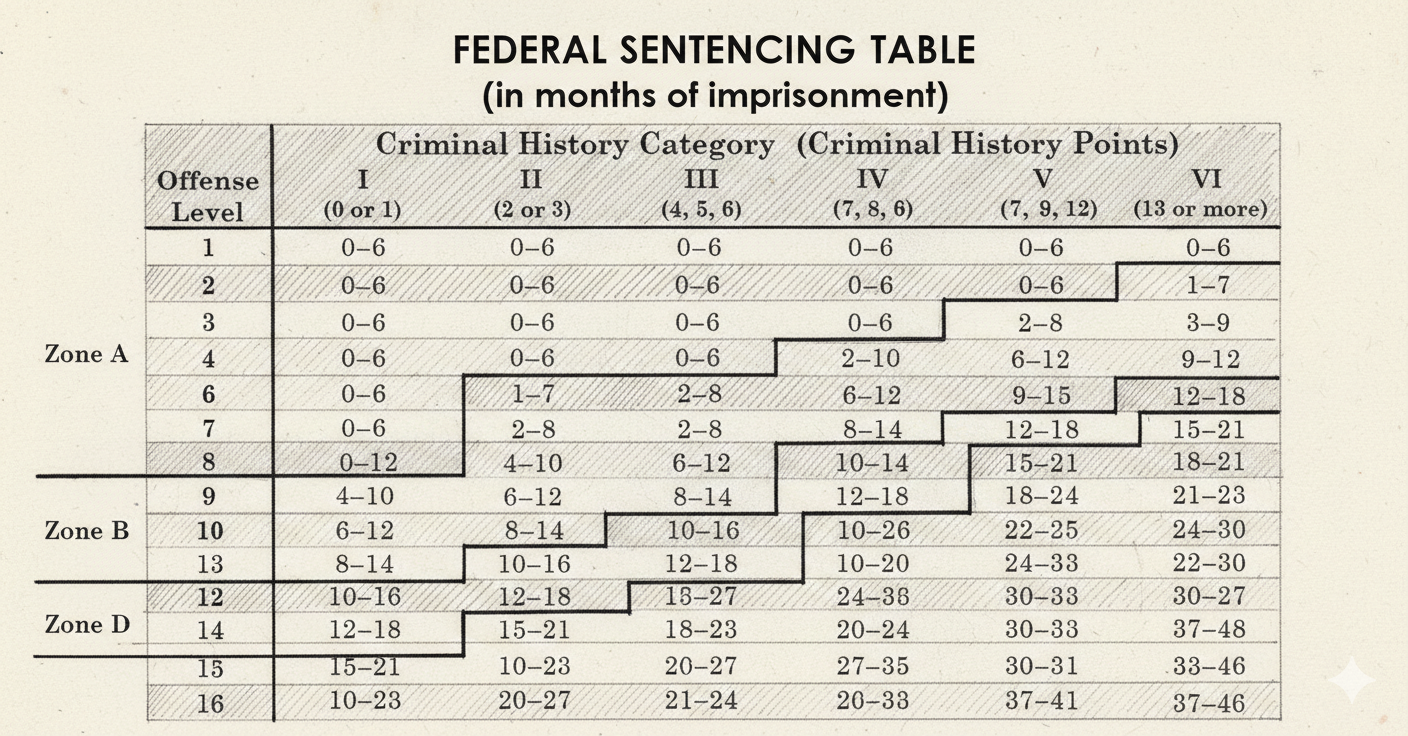
A 5K1.1 motion is a formal request by prosecutors asking the judge to reduce your sentence because you provided substantial assistance. This motion is filed under §5K1.1 of the U.S. Sentencing Guidelines.
This is the part of cooperation most defendants focus on, but there are important realities:
You don’t automatically receive a 5K1.1 motion just because you cooperated. Prosecutors grant these motions only when your assistance produces meaningful results. Even honest, extensive cooperation may not qualify if it doesn’t move their investigation forward.
[husion_separator style_type=”single solid” class=”” id=”” sep_color=”” top_margin=”px”
bottom_margin=”15px” width=”25%” alignment=”left”][/fusion_separator]
What Judges Consider Under §5K1.1
If the government does file the motion, the judge considers factors such as:
- The completeness and truthfulness of your information
- The significance and usefulness of your help
- The risk you assumed by cooperating
- How your assistance influenced other cases
Although prosecutors control whether a motion is filed, the judge decides how much of a reduction you receive. Sometimes judges follow the prosecution’s recommendation; sometimes they go further; sometimes they do less.
Going Below Mandatory Minimums: Section 3553(e)
A §5K1.1 motion allows judges to depart below the sentencing guideline range. However, if your offense carries a statutory mandatory minimum sentence, the government must also file a motion under 18 U.S.C. §3553(e) to allow the judge to go below that mandatory floor.
Section 3553(e) is the specific mechanism that makes mandatory minimums inapplicable based on substantial assistance. Like §5K1.1, filing a §3553(e) motion is entirely within the government’s discretion.
Cooperation Does Not Guarantee You’ll Avoid Prison
Even strong cooperation does not automatically eliminate prison time. Many federal offenses carry substantial guideline ranges, and judges consider several statutory factors beyond cooperation.
A 5K1.1 motion gives the judge permission to sentence you below the guideline range. When combined with a §3553(e) motion, you can be sentenced below mandatory minimums. But how far below is always up to the judge.
Some defendants receive dramatic reductions—years off the guideline range. Others receive more modest benefits. Every case is different.
How Cooperation Agreements Can Create New Problems
Cooperation can help, but it is not without risk:
- The government may decide your information wasn’t useful enough. You might cooperate fully and honestly, yet prosecutors may choose not to file a 5K motion.
- You can expose yourself to new charges. If you admit to conduct the government wasn’t aware of, you may face additional charges unless your agreement protects you. This is something we negotiate carefully.
- Safety concerns are real. In Miami, cooperation can place people at risk—especially in cases involving drug trafficking organizations or groups tied to other countries.
- Statements can lead prosecutors to new evidence against you. Even if your words aren’t used directly, they can point agents toward witnesses or documents that strengthen their case.
These risks are part of why cooperation shouldn’t be approached casually.
Rule 35 Motions vs. 5K1.1 Motions
Clients often confuse these two mechanisms:
5K1.1 Motion
- Filed before sentencing
- Based on cooperation before sentencing
Rule 35(b) Motion
- Filed after sentencing
- Based on cooperation that occurs after sentencing
- Must be filed within one year of sentencing (with limited exceptions for later usefulness)
Some clients continue helping investigators after they are sentenced. If their assistance later leads to results, prosecutors can return to court and request a sentence reduction under Rule 35(b).
Cooperation vs. the Federal Safety Valve
Not everyone needs to cooperate to receive a reduced sentence. The Safety Valve under 18 U.S.C. §3553(f) allows certain drug-offense defendants to avoid mandatory minimum sentences entirely when they meet the statutory criteria.
Updated Safety Valve Eligibility (Post–First Step Act)
A defendant qualifies if all of the following are true:
- Criminal history: The defendant does not have:
- More than 4 total criminal history points (excluding 1-point offenses)
- Any prior 3-point offense
- Any prior 2-point violent offense
- No use of violence or credible threats of violence.
- The offense did not involve a firearm or dangerous weapon.
- The defendant was not an organizer, leader, manager, or supervisor.
- The defendant truthfully discloses all information about their own conduct before sentencing.
The key distinction: Safety Valve relief requires honesty about your own actions but does not require you to testify against or implicate others. For many clients, this provides a more secure and less risky path to avoid mandatory minimums—especially where cooperation is dangerous or would expose them to new charges.
How We Evaluate Whether Cooperation Makes Sense
Before advising anyone to consider cooperation, we walk through questions such as:
- Can your information actually help prosecutors?
- Are you prepared to testify if necessary?
- Will your statements expose you to unrelated conduct?
- Are there alternative strategies that could produce a better outcome?
- Are there safety concerns for you or your family?
- Do you qualify for Safety Valve or other non-cooperation relief?
Cooperation is a strategic decision, not a moral one. You should only consider it after a careful legal analysis.
When Cooperation Works Well
We’ve represented clients who avoided decades behind bars because they provided meaningful information or testimony. In some cases, prosecutors filed strong 5K1.1 motions, and judges went well below the guideline range. In a few situations, cooperation helped clients avoid prison altogether.
When the facts line up and the government genuinely needs your help, cooperation can be transformative.
When Cooperation Is Not the Right Move
There are situations where cooperating offers little benefit or exposes you to major risks:
- You have no helpful information
- Your information is already known to prosecutors
- Your statements would reveal uncharged conduct
- Your cooperation would place you or your family in danger
- You are unwilling or unable to testify
- You already qualify for Safety Valve or another form of relief
A good defense lawyer will be candid about these realities and will not push cooperation simply because it is an available option.
How We Handle Cooperation Discussions and 5K1.1 Issues
When clients consider cooperation, our role includes:
- Reviewing the evidence before any discussions with agents
- Preparing for the proffer to avoid damaging misstatements
- Negotiating the strongest possible cooperation terms
- Protecting against exposure to new charges
- Communicating with prosecutors throughout the process
- Advocating vigorously at sentencing to maximize any reduction
Federal sentencing is high-stakes. Every detail matters, and experience can make a meaningful difference.
Talk to a Miami Federal Criminal Defense Lawyer Before Speaking to Agents
If agents have approached you, or you’ve been indicted and think cooperation might help, speak with a defense lawyer before saying a single word. Cooperation can be valuable, but it is not always the right strategy—and once you begin down that path, you can’t rewind the conversation.
CALL US NOW for a CONFIDENTIAL INITIAL CONSULTATION at (305) 538-4545, or take a moment to fill out our confidential and secure intake form.* The additional details you provide will greatly assist us in responding to your inquiry.
*Due to the large number of inquiries we receive, providing specific details about your case helps us respond promptly and appropriately.
THERE ARE THOUSANDS OF LAW FIRMS AND ATTORNEYS IN SOUTH FLORIDA. ALWAYS INVESTIGATE A LAWYER’S QUALIFICATIONS AND EXPERIENCE BEFORE MAKING A DECISION ON HIRING A CRIMINAL DEFENSE ATTORNEY FOR YOUR MIAMI-DADE COUNTY CASE.