



Discovery in a Federal Criminal Case: What Every Defendant Should Know
When you’re facing federal charges, one of the first questions you’ll ask is, “What evidence does the government have against me?” In the federal system, the answer comes through a process called discovery.
If you or someone close to you is involved in a federal investigation, understanding this process is one of the most important steps you can take to protect your rights.
As federal criminal defense attorneys in Miami, we guide clients through this process every day. Below, we explain how discovery works, what federal prosecutors must provide, what they don’t have to hand over, and how we use this information to challenge the government’s case.
What Is Discovery in a Federal Criminal Case?
Discovery is the formal exchange of evidence before trial. In federal court, it is governed primarily by:
- Federal Rule of Criminal Procedure 16
- The Brady Rule (and the related Giglio rule)
- The Jencks Act (18 U.S.C. § 3500 and Rule 26.2)
- The Southern District of Florida Standing Discovery Order and Local Rule 88.10
Federal discovery is far more limited than most people expect. Unlike civil cases—where both sides exchange massive volumes of information—federal prosecutors are not required to give the defense every document they possess.
The Standing Discovery Order: A Miami Advantage
In the Southern District of Florida, we can request entry of a Standing Discovery Order under Local Rule 88.10. That request triggers specified discovery duties for the government and, once those duties are met, certain duties for the defense.
The local rule generally requires trial-related discovery within 14 days after arraignment unless the court orders a different deadline. Expert disclosures follow a separate schedule, and Jencks Act witness statements are subject to different timing rules. We review the orders in your case to determine what must be produced and when.
What the Government Must Provide Under Rule 16
Rule 16 is the foundation of federal criminal discovery. Here’s what prosecutors must turn over:
1. Your Statements
This includes:
- Written or recorded statements you made.
- Oral statements you made in response to interrogation by someone you knew was a government agent, if the government intends to use them at trial.
- Any grand jury testimony you gave.
Important: Your right to obtain your own recorded grand jury testimony relating to the charged offense does not give you automatic access to other witnesses’ testimony. Our guide to federal grand jury proceedings explains how grand jury secrecy works.
Why this matters: We analyze your statements for Miranda issues, coercion, inaccuracies, and grounds to suppress them.
2. Your Criminal History
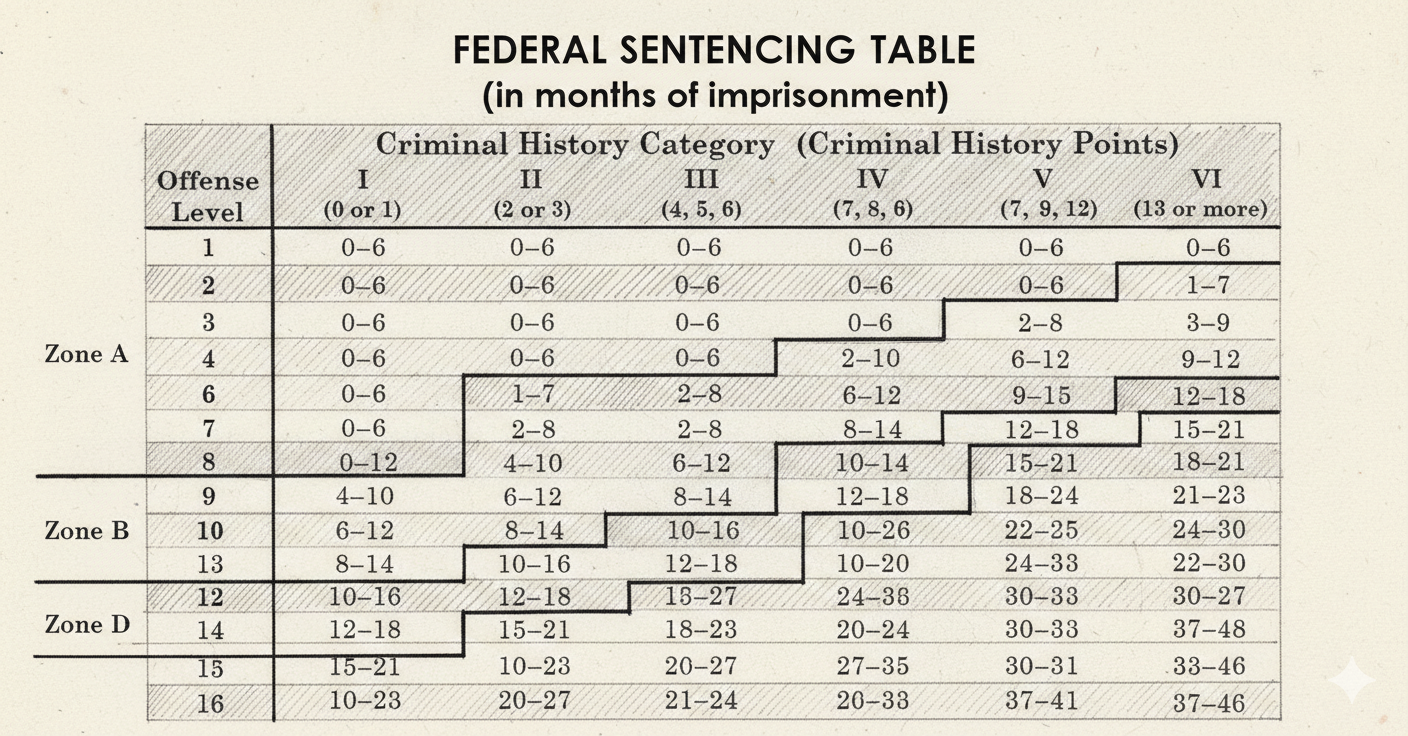
Rule 16 requires the government to turn over any criminal history information about you that is in its possession.
We review this record to check its accuracy and assess how your criminal history affects your federal sentencing range.
3. Documents, Digital Evidence, and Physical Items
Under Rule 16(a)(1)(E), we receive:
- Items seized during searches
- Digital evidence (texts, emails, phone extractions, social media data)
- Photographs and video surveillance
- Business or financial records
- Any documents or objects that are:
- material to preparing your defense,
- the government intends to use at trial, or
- were obtained from or belong to you
Why this matters: We don’t just look at what the prosecutor plans to show a jury—we push for the underlying data that may prove your innocence or weaken their narrative.
4. Test and Examination Reports
This includes:
- Drug lab reports
- DNA results
- Fingerprint comparisons
- Forensic computer analysis
- Other scientific or technical evaluations
We analyze chain of custody, methodology, qualifications, and calibration issues—scientific evidence is not nearly as bulletproof as people think.
5. Expert Witness Information
Prosecutors must provide:
- The expert’s opinions
- The bases for those opinions
- The expert’s qualifications
This allows us to challenge unreliable or overstated government science.
Note on Reciprocity
Requesting discovery can trigger duties to disclose certain defense materials in return. Depending on the request and the government’s compliance, these duties may cover documents and objects we intend to use in our case-in-chief, certain examination or test reports, and expert testimony. Separate rules apply when the defense gives notice of expert testimony about your mental condition. These duties do not give prosecutors unrestricted access to our defense file.
The Brady Rule: Evidence That Helps You
Under Brady v. Maryland and Giglio v. United States, the government must disclose:
- Evidence suggesting someone else committed the crime
- Information that undermines a government witness’s credibility
- Promises, benefits, or deals given to cooperating witnesses
- Inconsistent statements made by witnesses
- Any material favorable to you on guilt or punishment
The timing problem: While Brady requires disclosure in time for effective use at trial, it does not set a specific national deadline. That creates a gray area where some prosecutors delay disclosure.
We push aggressively—using the Standing Discovery Order and Local Rule 88.10—to force the government to turn over Brady material early enough to use it in plea negotiations, not just at trial.
The Jencks Act: Witness Statements Released Later
The Jencks Act and Rule 26.2 govern prior statements of witnesses who will testify for the government. Technically, prosecutors do not have to turn over these statements until:
- after the witness testifies on direct examination, and
- after the defense requests the statements.
Covered material includes:
- Grand jury transcripts of testifying witnesses
- Written statements signed, adopted, or approved by the witness.
- Substantially verbatim recordings of oral statements made at the time the witness spoke, or transcripts of those recordings.
- Certain FBI 302s if they qualify as “statements”
We seek agreement from prosecutors to provide Jencks material before trial so we have time to prepare for cross-examination. The timing varies by case; you should not assume these statements will arrive a set number of days before trial.
Rule 26.2 also covers qualifying statements of defense witnesses other than the defendant and applies in certain hearings beyond trial.
What Federal Discovery Does Not Include
Federal discovery does not give the defense:
- Immediate access to confidential informant identities (unless a balancing test is met)
- Internal government strategy memos or attorney work product
- Rough notes that were not adopted by a witness (unless they qualify as Jencks or contain Brady material)
- Automatic access to grand jury transcripts of witnesses who will not testify at trial. Disclosure may still be required for favorable evidence or authorized under an exception to grand jury secrecy.
These limits often surprise people—but they are built into federal law.
How We Use Discovery to Build Your Defense
Discovery isn’t just documents. It’s strategy.
Challenging Searches
If we find problems with warrants—overbreadth, omissions, or false statements—we move to suppress evidence.
Testing the Evidence
We scrutinize gaps in surveillance, flawed digital forensics, missing data, unreliable witnesses, and inconsistent statements.
Negotiation Leverage
Reviewing the government’s evidence helps us assess trial risks, identify weaknesses in the prosecution’s case, and advise you about the terms of a proposed federal plea agreement.
What You Should Do as a Federal Defendant
You can help your defense by following this guidance:
- Be completely honest with your attorneys. Discovery often reveals everything eventually.
- Do NOT investigate on your own or contact witnesses. This can lead to obstruction charges.
- Do NOT delete anything. Destroying digital data can be a separate federal crime.
- Be patient. Federal cases often involve huge amounts of digital evidence. Rushing is dangerous.
Final Thoughts: Discovery Is Where Cases Are Won
If you’re facing federal charges in Miami or Fort Lauderdale, the discovery process is one of the most critical stages of your case. Through discovery, we can:
- Identify flaws in the government’s evidence
- Seek suppression of illegally obtained material
- Obtain exculpatory (Brady) information
- Negotiate from a position of strength
The earlier a skilled federal criminal defense lawyer becomes involved, the sooner we can enforce the Standing Discovery Order and begin building the strongest defense possible.
CALL US NOW for a CONFIDENTIAL INITIAL CONSULTATION at (305) 538-4545, or take a moment to fill out our confidential and secure intake form.* The additional details you provide will greatly assist us in responding to your inquiry.
*Due to the large number of inquiries we receive, providing specific details about your case helps us respond promptly and appropriately.
THERE ARE THOUSANDS OF LAW FIRMS AND ATTORNEYS IN SOUTH FLORIDA. ALWAYS INVESTIGATE A LAWYER’S QUALIFICATIONS AND EXPERIENCE BEFORE MAKING A DECISION ON HIRING A CRIMINAL DEFENSE ATTORNEY FOR YOUR MIAMI-DADE COUNTY CASE.