


Federal Plea Agreements
If you’re facing federal criminal charges in South Florida, you’re likely overwhelmed. Federal prosecutors do not file cases casually. When the United States government indicts you — whether for drug trafficking, healthcare fraud, wire fraud, conspiracy, firearm offenses, or another federal crime — the stakes are extremely high.
In many federal cases, the prosecution offers a plea agreement rather than proceeding to trial. That offer often comes with pressure. It may include deadlines. It may include warnings about superseding indictments or increased sentencing exposure if you reject it.
You may be asking yourself:
- Should you accept a plea deal in federal court?
- What does a federal plea agreement actually mean?
- Can the terms be negotiated?
- What happens if you turn it down?
Here’s what you need to understand before you even consider signing a federal plea agreement.
A federal guilty plea is not simply a procedural step. It is one of the most consequential decisions you will ever make.
What Is a Federal Plea Agreement?
A federal plea agreement is a negotiated contract between you and the United States Attorney’s Office. In exchange for pleading guilty to one or more charges, the government agrees to provide something in return.
That may include:
- Dismissing certain counts
- Agreeing not to bring additional or future charges arising from the same conduct
- Recommending a particular sentencing guideline calculation
- Supporting a reduction for acceptance of responsibility
- Filing a motion for a reduced sentence based on cooperation
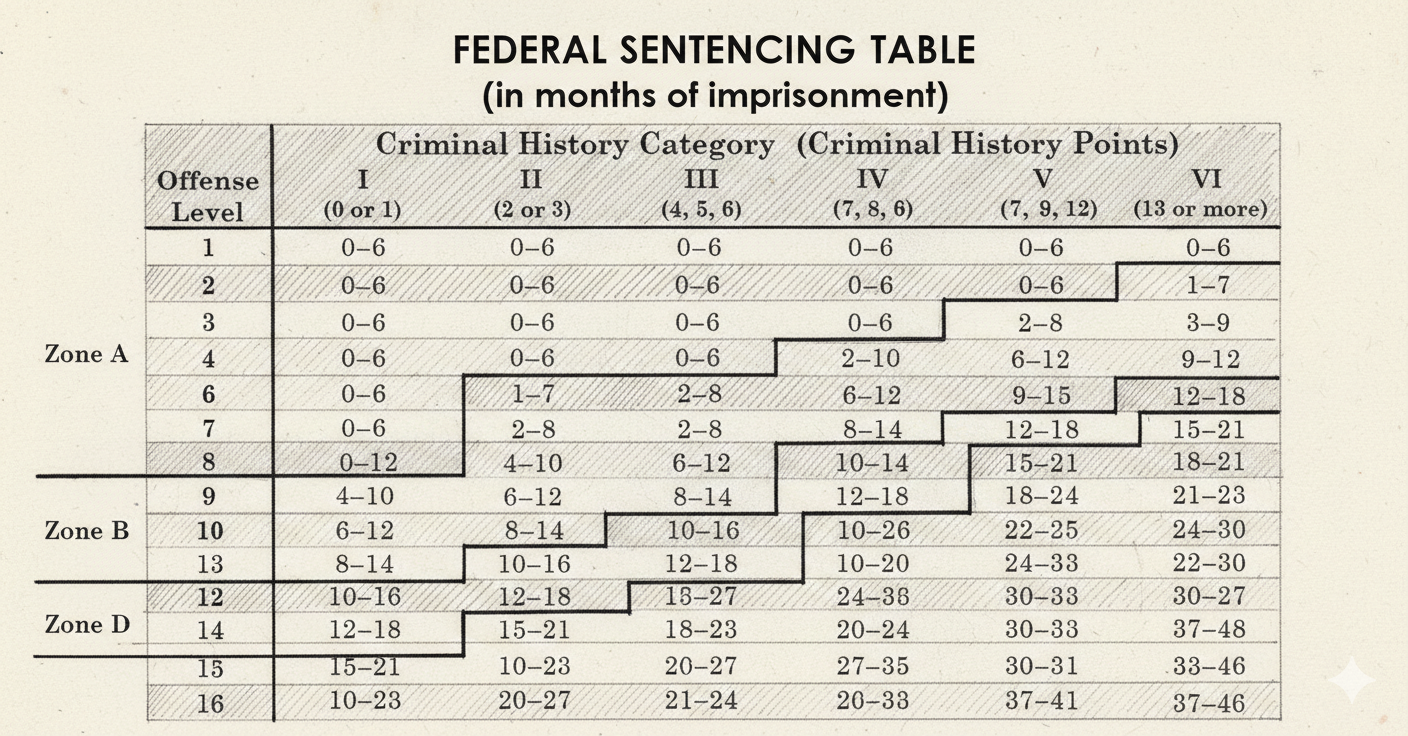
Unlike many Florida state cases, federal plea agreements are driven heavily by the Federal Sentencing Guidelines. Although advisory, the Guidelines remain the starting point for every sentencing decision.
Understanding how those Guidelines apply to you is often the central issue in deciding whether a plea offer is favorable.
How Federal Plea Agreements Work in Miami
Most federal cases in our area are prosecuted in the Southern District of Florida.
The typical process unfolds as follows:
- Indictment or Complaint – Formal federal charges are filed.
- Arraignment – You enter an initial plea, usually not guilty.
- Discovery and Investigation – We review the evidence and conduct our own independent analysis.
- Guideline Calculation and Exposure Assessment – We determine your realistic sentencing range.
- Plea Negotiations – We negotiate directly with the Assistant U.S. Attorney.
- Change of Plea Hearing – If you accept a deal, you plead guilty before a federal judge.
- Presentence Investigation and Sentencing – The U.S. Probation Office prepares a Presentence Investigation Report (PSR), and the court imposes sentence.
You should never evaluate a plea agreement without understanding both your trial risk and your full sentencing exposure.
The Three Types of Federal Plea Agreements (Rule 11)
Federal plea agreements are governed by Rule 11 of the Federal Rules of Criminal Procedure.
Rule 11(c)(1)(A) Agreements
Under this structure, the government agrees to dismiss certain counts and/or refrain from bringing additional charges arising from the same conduct. This can substantially reduce sentencing exposure, particularly in cases involving multiple counts or potential enhancements.
Rule 11(c)(1)(B) Agreements
This is the most common type of federal plea agreement in Miami. The government agrees to recommend a particular guideline calculation or sentence, but the judge is not bound by that recommendation. That means the court can impose a higher sentence than the parties anticipated.
Rule 11(c)(1)(C) Agreements (Binding Pleas)
Here, both sides agree to a specific sentence or sentencing range. If the judge accepts the agreement, that sentence becomes binding. If the judge rejects it, you may withdraw your plea. These agreements are less common but can provide certainty when negotiated effectively.
The Federal Sentencing Guidelines: Where Cases Are Truly Decided
In federal court, sentencing exposure is driven by the Federal Sentencing Guidelines Manual in effect at the time of sentencing. The Guidelines are amended periodically, and staying current matters.
Your guideline range is determined by:
- Base offense level
- Specific offense characteristics
- Enhancements (role in the offense, firearm possession, sophisticated means, etc.)
- Acceptance of responsibility reduction (typically 2–3 levels)
- Criminal history category
For example, drug quantity drives offense level in narcotics cases. Loss amount drives exposure in fraud cases. Enhancements can significantly increase time, especially in white-collar and firearm prosecutions.
We conduct our own independent guideline analysis. You should never rely solely on the government’s calculations.
The Role of the U.S. Probation Office and the Presentence Report
Many defendants assume that if the defense and prosecution agree on a guideline calculation in a plea agreement, that number controls.
It does not.
After your guilty plea, the U.S. Probation Office — an independent arm of the court — prepares a Presentence Investigation Report (PSR). The Probation Officer conducts their own guideline calculation. Sometimes that calculation differs from what the parties anticipated.
Federal judges frequently give significant weight to the PSR’s analysis. If Probation calculates a higher offense level, that can increase your exposure — even if the plea agreement contained a recommendation.
Federal sentencing advocacy does not end when you sign a plea agreement. In many cases, that is when the real fight begins.
You May Be Sentenced on More Than the Count You Plead To: Relevant Conduct
One of the most misunderstood aspects of federal sentencing is “relevant conduct.”
In federal court, you are often sentenced based not just on the specific count you plead guilty to, but on the broader conduct that is part of the same course of conduct or scheme. For example:
- You plead guilty to one wire fraud count involving $50,000. The overall alleged scheme involved $1 million. Under the Guidelines, the $1 million figure may control the loss calculation — even if you did not plead guilty to every count.
- In drug cases, relevant conduct may include drug quantities beyond the specific transaction charged in the count of conviction.
This concept surprises many defendants. It is one of the most important issues we analyze before advising you to accept a plea agreement.
Cooperation Agreements and Substantial Assistance
In certain cases, the government offers a cooperation plea agreement. If you provide substantial assistance, prosecutors may file a 5K1.1 motion before sentencing or a Rule 35 motion after sentencing. These motions permit the judge to sentence below the guideline range — and in some cases below mandatory minimums.
However, cooperation carries risk:
- You must provide complete and truthful information.
- You may be required to testify.
- If the government determines you were not fully forthcoming, the agreement can be voided.
We evaluate whether cooperation aligns with your long-term interests before recommending that course.
Federal Plea Agreements in Drug Trafficking Cases
In Miami, federal drug cases frequently involve cocaine trafficking, fentanyl distribution, maritime interdictions, and conspiracy allegations. Drug quantity drives sentencing.
For example, five kilograms of cocaine triggers a ten-year mandatory minimum, as does one kilogram of heroin. Strategic plea negotiations may focus on:
- Reducing attributed drug quantity
- Avoiding firearm enhancements
- Removing leadership adjustments
- Securing safety valve eligibility
The federal safety valve allows qualifying defendants to receive a sentence below an otherwise applicable mandatory minimum. After the First Step Act and subsequent Supreme Court clarification, eligibility is broader than many people assume and can apply even to defendants with a limited prior record. It also typically provides a two-level reduction under the Sentencing Guidelines.
Federal Plea Agreements in White Collar Cases
White collar prosecutions in South Florida commonly involve wire fraud, healthcare fraud, PPP loan fraud, bank fraud, and identity theft. In fraud cases, loss amount drives the guideline range.
Prosecutors often rely on “intended loss,” which may be higher than actual loss. Negotiating that figure can substantially reduce sentencing exposure.
We also evaluate:
- Minor role reductions
- Sophisticated means enhancements
- Restitution structuring
- Professional licensing consequences
For many professionals, the collateral damage can extend well beyond incarceration.
Appeal Waivers in Federal Plea Agreements
Most federal plea agreements in the Southern District of Florida include an appeal waiver. These waivers are not symbolic — they are routinely enforced.
In many cases, you waive the right to appeal your sentence unless the sentence exceeds the statutory maximum, the court imposes an upward departure or variance beyond the guideline range, or the government files an appeal.
That means even if there is a guideline miscalculation, your ability to challenge it may be severely limited. While these waivers are broad, they typically do not preclude claims for ineffective assistance of counsel or challenges to sentences exceeding statutory authority. That said, the exceptions are narrow, and courts in the Southern District of Florida routinely enforce these provisions.
Before signing a federal plea agreement, you must understand exactly what rights you are giving up.
What Rights Do You Waive by Pleading Guilty?
A federal guilty plea waives significant constitutional protections, including:
- The right to a jury trial
- The right to confront witnesses
- The right against self-incrimination
- Most appellate rights
- Most post-conviction challenges
Once entered and accepted, your options narrow considerably.
Can You Withdraw a Federal Guilty Plea?
If you move to withdraw your plea before sentencing, Rule 11(d)(2)(B) allows withdrawal for “any fair and just reason.” Courts in the Southern District of Florida typically evaluate factors such as:
- Whether you had the assistance of competent counsel
- Whether your plea was knowing and voluntary
- Whether judicial resources would be conserved
- Whether the government would be prejudiced
While this standard is more flexible before sentencing than it is after, federal judges do not grant these motions automatically. Simply having second thoughts is not enough. You must present a legitimate reason supported by the record.
After sentencing, the situation changes dramatically. At that point, you cannot simply withdraw your plea. Challenges typically arise through a direct appeal or a motion under 28 U.S.C. § 2255. Those proceedings require showing constitutional error, such as ineffective assistance of counsel or that your plea was not knowing and voluntary.
That is why you should treat a federal guilty plea as a decision of final consequence.
Make This Decision Strategically
Federal prosecutors may present a plea offer as a limited opportunity. You should not make this decision out of fear.
You should make it after:
- A complete guideline analysis
- A realistic trial risk assessment
- A careful review of the evidence
- A thorough evaluation of collateral consequences
Federal court is serious. Your freedom, your reputation, and your future are on the line.
Before you sign anything, make sure you fully understand what you are agreeing to — and how it will affect the rest of your life.
If you would like a confidential evaluation of your federal plea agreement options, contact our office to discuss your situation.
CALL US NOW for a CONFIDENTIAL INITIAL CONSULTATION at (305) 538-4545, or take a moment to fill out our confidential and secure intake form.* The additional details you provide will greatly assist us in responding to your inquiry.
*Due to the large number of inquiries we receive, providing specific details about your case helps us respond promptly and appropriately.
THERE ARE THOUSANDS OF LAW FIRMS AND ATTORNEYS IN SOUTH FLORIDA. ALWAYS INVESTIGATE A LAWYER’S QUALIFICATIONS AND EXPERIENCE BEFORE MAKING A DECISION ON HIRING A CRIMINAL DEFENSE ATTORNEY FOR YOUR MIAMI-DADE COUNTY CASE.