


Can Police Use Drones to Spy on Your Backyard Without a Warrant?
Miami Criminal Defense Lawyer Explains Your Rights Under Florida & Federal Law
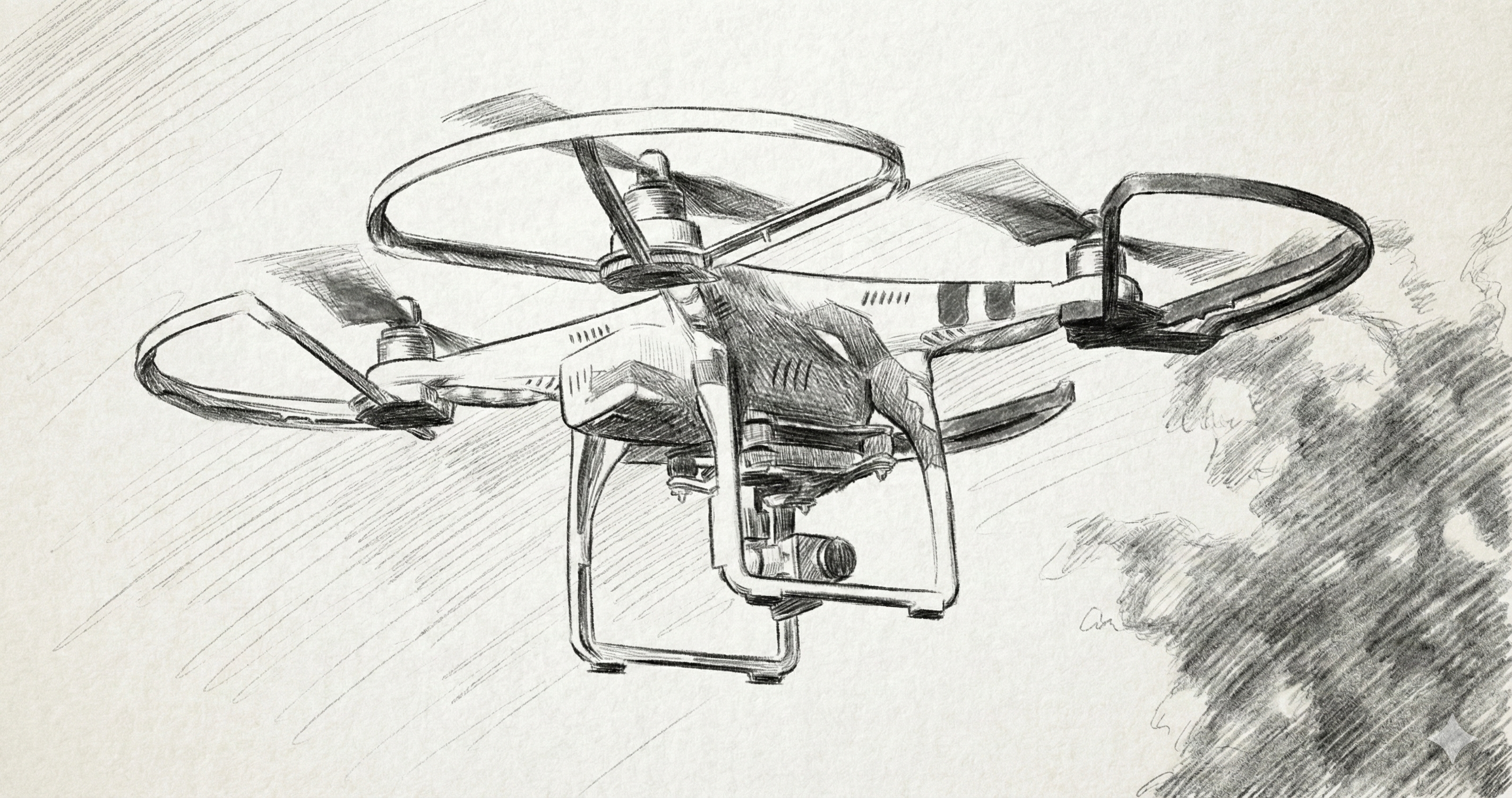
If you’ve noticed a drone hovering over your backyard, you’re probably wondering the same thing most people do: Can the police legally spy on you from the air—without ever stepping foot on your property or getting a warrant?
As criminal defense lawyers, we get this question more often than you’d think. Technology has evolved faster than the law can keep up, and police departments across Florida increasingly rely on drones for surveillance, investigations, and even routine patrols.
But the Constitution hasn’t changed. You still have the right to privacy—and law enforcement still must follow the rules.
Below, we break down when police drone surveillance is legal, when it violates your rights, and what you should do if you believe you were the target of an illegal search.
Police Drones & Your Backyard — The Law in Florida
Florida Law Is Very Clear: Police Usually Cannot Use Drones to Spy on You Without a Warrant
Florida has one of the strongest anti-drone-surveillance laws in the country: the Freedom from Unwarranted Surveillance Act (F.S. 934.50).
Under this statute, law enforcement is generally prohibited from using drones to gather evidence or conduct surveillance of privately owned property without a warrant—unless a specific exception applies.
What Counts as “Privately Owned Property”?
Your:
- Backyard
- Patio
- Pool area
- Enclosed yard
- Property behind your home
- Any area where you have a reasonable expectation of privacy
If the police fly a drone to see something they couldn’t otherwise see from a public vantage point, the law considers that a search. And searches generally require warrants.
The Fourth Amendment vs. Florida Statute
Even without Florida’s statute, the Fourth Amendment protects you from unreasonable searches. But federal drone law is still evolving.The same problem appears with other emerging investigative tools, including environmental DNA and the future of forensics.
The “Navigable Airspace” Problem
Police often cite older Supreme Court cases, such as California v. Ciraolo and Florida v. Riley, which allowed aerial surveillance from airplanes and helicopters flying in “public navigable airspace.”
Some courts and scholars argue that drones are different—they can fly lower, hover longer, and intrude more directly into private spaces—but the U.S. Supreme Court has not yet issued a definitive ruling on modern drone surveillance.
This is why Florida’s statute matters so much. Florida law closes federal loopholes by explicitly stating that you are presumed to have a reasonable expectation of privacy if you cannot be seen from ground level, even if you can be observed from the air.
When Police Can Use a Drone Without a Warrant in Florida
While the general rule is “get a warrant,” F.S. 934.50 includes several specific exceptions. Police may try to rely on these to justify warrantless flights, so it is important to understand them.
1. Large Crowds (50+ People)
Police may use drones to monitor a crowd of 50 or more people for public safety purposes.
Example: If you host a large backyard party, protest, or event that draws more than 50 people, police may legally fly a drone overhead to monitor the crowd.
2. Preventing Imminent Danger
Police may deploy drones without a warrant if they have a reasonable suspicion that immediate action is necessary to prevent:
- Imminent danger to life
- Serious damage to property
- The imminent escape of a suspect
- The imminent destruction of evidence
3. Crime Scenes & Traffic Crashes
Drones may be used to facilitate evidence collection at crime scenes or traffic crash scenes. This is typically about documenting what has already happened, not flying around to search for crimes in progress.
4. Traffic Management
Law enforcement may use drones to assist with traffic flow and management. However, they cannot issue a traffic citation based solely on images or video captured by a drone.
5. Missing Persons & Terrorist Activity
Drones may be deployed to search for a missing person or to respond to a high risk of a terrorist attack when such a threat has been designated by the Secretary of Homeland Security.
Unless one of these specific statutory exceptions applies, police must seek a warrant.
When Police Drone Surveillance Is Illegal
If the police:
- Fly a drone low over your yard looking for drugs, weapons, or stolen property…
- Record video of your family in the pool or other private areas…
- Peer through your windows with a drone-mounted camera…
…and they do not have a warrant or a valid exception (such as the 50+ person crowd rule), that surveillance is likely illegal under Florida law.
What Happens to Evidence from Illegal Drone Surveillance?
The Evidence Can Be Suppressed
If we can show that police violated F.S. 934.50, Florida law explicitly states that evidence obtained in violation of the drone statute is inadmissible in court. This includes:
- The drone footage itself; and
- Any evidence discovered as a result of that footage (often called “fruit of the poisonous tree”).
You May Have a Civil Claim
In addition to suppressing evidence, you may have a separate civil claim against the agency for:
- Compensatory damages (money damages for the harm caused)
- Injunctive relief (a court order requiring the agency to stop the unlawful surveillance)
- Attorney’s fees (in some cases, the agency may be required to pay your lawyer if you prevail)
While the statute does not list “destruction of data” as a specific, standalone remedy, your lawyer may be able to seek destruction of illegally obtained footage as part of injunctive relief.
What To Do If You Think Police Used a Drone to Spy on You
If you believe a police drone was used to surveil your property, do not ignore it. Drone footage is often used later to support search warrants, arrests, or criminal charges.
1. Document Everything
Write down the date, time, and location, and describe what you saw: how low the drone flew, how long it hovered, whether you saw a camera, and whether it appeared to focus on your property specifically.
2. Preserve Any Evidence You Have
If you took photos or video of the drone on your phone or security system, save them in multiple places (for example, your phone, the cloud, and a backup drive).
3. Don’t Confront Police or Investigators
Do not contact the officers or agency directly to argue about the drone use. Anything you say could potentially be used against you or tip them off about what you know.
4. Contact a Criminal Defense Lawyer Immediately
An experienced criminal defense lawyer can:
- Demand disclosure of drone flight logs and related records;
- Analyze whether a valid statutory exception applies (such as the 50+ person crowd exception);
- File motions to suppress illegally obtained evidence; and
- Evaluate whether you may have a civil claim for invasion of privacy or unlawful surveillance.
Charged After Drone Surveillance? Call Us Immediately.
If police used a drone in your investigation, there is a strong chance they pushed—or crossed—the boundaries of the law. You need a criminal defense lawyer who understands both the technology and the statute, and who knows how to challenge illegal surveillance in court.
CALL US NOW for a CONFIDENTIAL INITIAL CONSULTATION at (305) 538-4545, or take a moment to fill out our confidential and secure intake form.* The additional details you provide will greatly assist us in responding to your inquiry.
*Due to the large number of inquiries we receive, providing specific details about your case helps us respond promptly and appropriately.
THERE ARE THOUSANDS OF LAW FIRMS AND ATTORNEYS IN SOUTH FLORIDA. ALWAYS INVESTIGATE A LAWYER’S QUALIFICATIONS AND EXPERIENCE BEFORE MAKING A DECISION ON HIRING A CRIMINAL DEFENSE ATTORNEY FOR YOUR MIAMI-DADE COUNTY CASE.